

Sports Therapist for Runners in London
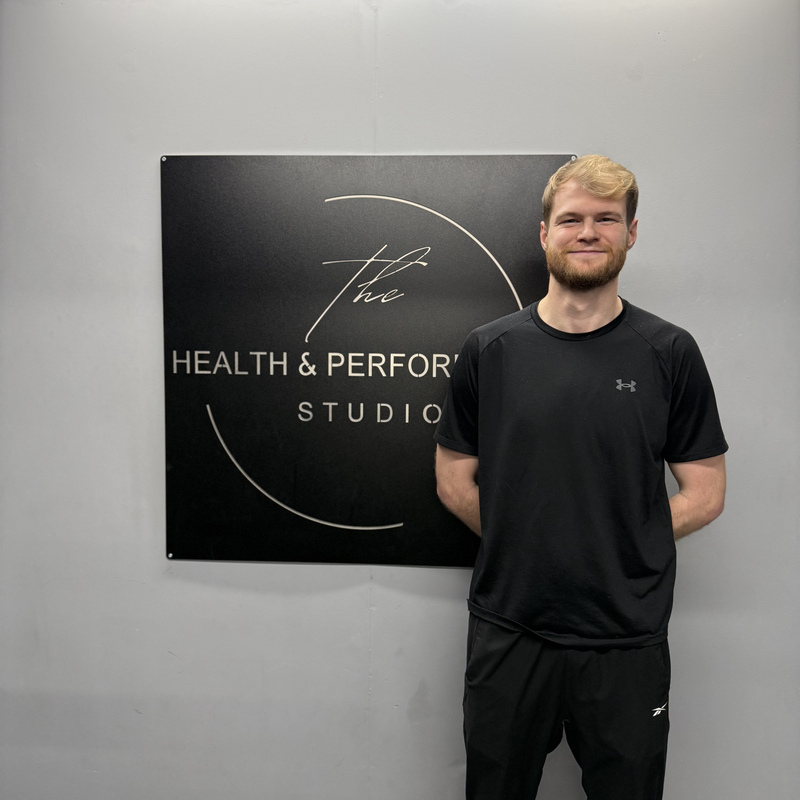
Running pain stopping you from training properly?
I help runners understand what may be causing their pain, manage their symptoms and build a clear plan to return to training.
Your assessment looks beyond the painful area. We consider your strength, movement, running load, recovery, previous injuries and current training goals.
Whether you are starting Couch to 5K, preparing for a marathon or competing at a high level, your treatment and rehab plan will be built around you.
Based on Little Portland Street near Oxford Circus, Marylebone and Fitzrovia.
Not sure if you need an appointment? Message Tom first.
Running injury treatment built around you
You will not receive a generic list of exercises or be told to stop running without an explanation.
Your assessment helps answer:
What is most likely contributing to your pain?
What is currently keeping it irritated?
Can you continue running safely?
How should you adjust your training?
What strength or mobility work do you need?
How can you reduce the chance of the problem returning?
Where possible, the aim is to keep you active while managing the injury.
Sometimes you may need to temporarily reduce or pause certain sessions. If that is the case, you will understand why and have a clear route back to running.
Why runners book with TB Sports Therapy
Running-specific injury assessments
Additional training in Functional Biomechanics of Running
More than six years of clinical experience
Experience helping runners from beginner to competitive level
Private treatment room and gym space
Strength, movement and functional testing
Hands-on treatment where appropriate
Personalised exercise plan delivered through an app
Clear return-to-running guidance
Central London clinic near Oxford Circus
The goal is not only to settle your current symptoms.
It is to help you understand the problem, rebuild your confidence and return to running with a plan.
Is this service right for you?
A running injury assessment may help if:
You experience pain during or after running
Your symptoms return whenever you increase your mileage
You have a race approaching and do not know whether to keep training
You have rested, but the problem returned when you started running again
You feel fine during easy runs but struggle with speed, hills or longer distances
You have tried exercises without seeing lasting progress
You are returning from a previous injury
You want to prevent a minor issue becoming a longer lay-off
You want a clear plan instead of guessing what to do
You do not need to know exactly what your injury is before booking.
Working that out is part of the assessment.
Running injuries I can help with
Common problems treated at the clinic include:
Calf pain and calf strains
Hamstring pain
Hip and glute pain
IT band pain
Plantar heel and arch pain
Foot and ankle pain
Bone stress injury rehabilitation
Recurring running-related niggles
Pain when returning to running
Each runner is different.
Two people can experience pain in the same area for very different reasons. Your assessment will focus on your symptoms, training history and individual physical findings.
What happens during your first appointment?
Your first appointment lasts 60 minutes.
1. We discuss your symptoms and running
We will cover:
When the problem started
Where and when you feel pain
Your recent training volume
Changes to distance, speed, hills or surfaces
Upcoming races
Your running shoes
Strength training and other sports
Previous injuries
What you want to return to
This helps build a clear picture of how the issue developed.
2. We assess your movement and strength
Your assessment may include:
Joint range of movement
Muscle strength
Single-leg control
Balance
Calf capacity
Hopping or landing
Running-specific movement
Functional exercises linked to your symptoms
Testing will be selected based on your injury and current ability.
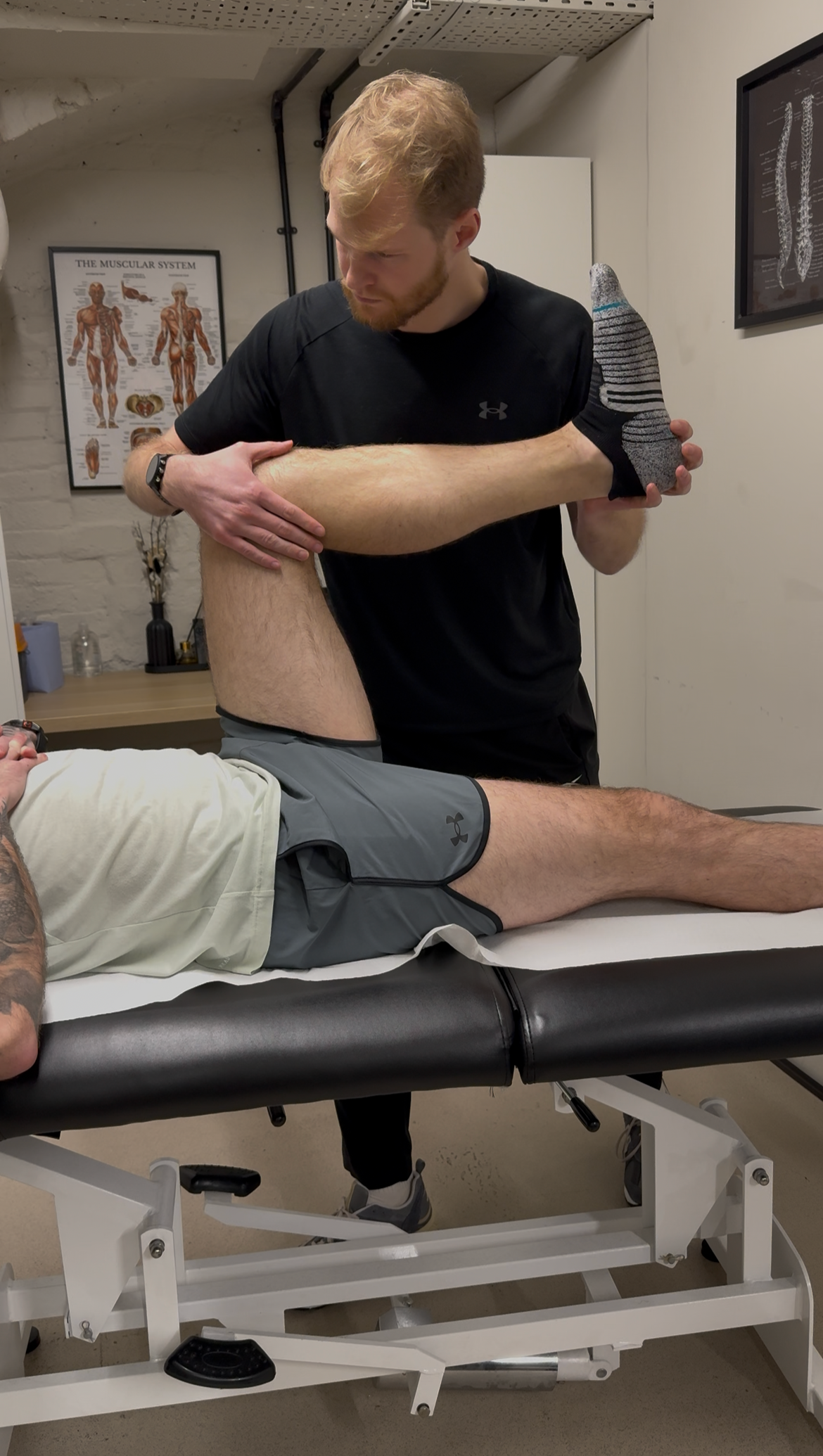
3. You receive treatment where appropriate
Treatment may include:
Sports massage and soft tissue treatment
Joint mobilisation
Dry needling
Movement coaching
Strength exercises
Advice on pain and training load
Treatment is used alongside rehabilitation rather than as a temporary standalone fix.
4. We build your plan
Before leaving, you will understand:
What is most likely contributing to your symptoms
Whether you can continue running
Which sessions to reduce or modify
Which exercises to complete
How often to complete them
What signs to monitor
How to progress back towards your goal
Your personalised rehabilitation programme will be sent through an app, with videos and clear instructions.
Running injury expertise you can trust
I am Tom Boggon, a qualified Sports Therapist with a BSc (Hons) in Sports Therapy and additional training in Functional Biomechanics of Running.
I have more than six years of experience assessing and treating sports and musculoskeletal injuries. This includes two years of placement experience supporting the first team at Luton Town Football Club.
My interest in rehabilitation also comes from personal experience.
I competed at a high level in triple jump before an injury interrupted my own training. Going through that process helped motivate me to become a therapist and support other people dealing with pain and disrupted training.
I now work with runners ranging from complete beginners to experienced marathon runners and competitive athletes.
You do not need to be fast or experienced to receive the same detailed approach.
“Tom is an excellent sports therapist. He has coached me specifically with my running training and technique as well as having treated me for various injuries with short and long term programmes/ treatments. He is patient, focused, highly knowledgeable and a pleasure to deal with. He is practical and realistic, resulting in much faster recovery times than I have experienced with other professionals. I highly recommend Tom for any sports therapy needs and for running coaching and training programs too.”
Amy Kingdon- half marathon runner
Your Running Assessment
60-minute Running Injury Assessment & Treatment — £100
Your appointment includes:
Detailed injury and training history
Clinical assessment
Strength and movement testing
Running-specific testing where appropriate
Hands-on treatment where useful
Clear explanation of your findings
Personalised rehabilitation programme
Training and return-to-running advice
This appointment is suitable for new clients and runners with a new or recurring injury.
Do you always need to stop running?
No.
Some injuries require a period away from running. Others can be managed by adjusting your distance, speed, frequency or route while you complete rehabilitation.
Completely resting until the pain disappears does not always solve the problem.
Many runners fall into the same cycle:
Pain develops.
They stop running.
The pain settles.
They return at the same level.
The pain returns.
This often happens because the symptoms have settled, but the runner has not rebuilt the capacity needed for their training.
Your plan may involve temporarily adjusting your running while improving strength, control and tolerance.
The decision will be based on your assessment rather than a blanket rule.
Training for a race?
An injury during race preparation does not automatically mean your event is over.
Your assessment will help determine:
Whether you can continue running
Which sessions are safest to keep
What training should be adjusted
How to manage pain after a run
Whether cross-training would help
How to rebuild your mileage
Whether your race goal remains realistic
The earlier you address the problem, the more options you usually have.
Do not wait until you are unable to run.
Sports Therapy for Runners in Central London
TB Sports Therapy is based at:
Health & Performance Studio
16–17 Little Portland Street
London
W1W 8BP
The clinic is close to:
Oxford Circus
Great Portland Street
Marylebone
Fitzrovia
Regent’s Park
Soho
Mayfair
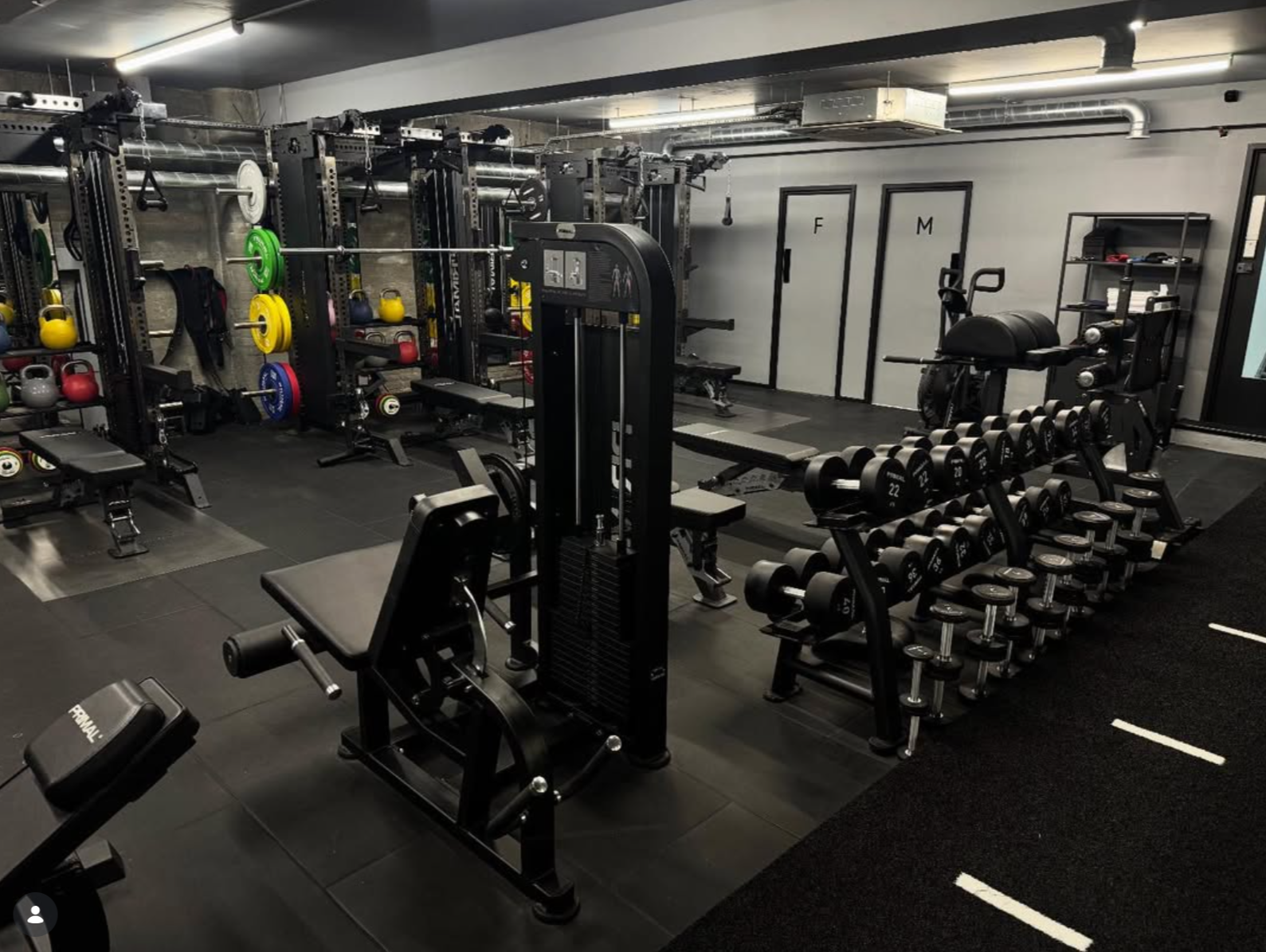
The clinic includes a private treatment room and access to gym space.
This allows your appointment to include proper strength, movement and running-specific testing rather than limiting the session to the treatment table.
Frequently asked questions
Should I stop running if I have pain?
Not always. Some injuries need rest, but many can be managed by temporarily adjusting your training. This might mean reducing your distance, avoiding speed sessions or replacing some runs with lower-impact exercise. Your assessment will help determine what is appropriate for you.
Can you help if I have a race coming up?
Yes. Your plan will consider your race date, current symptoms and training history. The priority will be to manage the injury safely while maintaining as much useful training as possible. There may be situations where racing is not advisable. This will be explained clearly if your assessment identifies a significant risk.
Do I need a scan before booking?
No. Many running injuries can be assessed clinically without a scan. If your symptoms or assessment suggest that imaging, a GP review or another specialist opinion is needed, this will be discussed with you.
Will I receive exercises?
Yes. You will receive a personalised programme through an app. It will include videos, instructions, sets and repetitions. Your exercises will be selected based on your assessment rather than only the location of your pain.
Do you provide running analysis?
Running-related movement may be assessed where it is relevant to your symptoms. The appointment also considers strength, mobility, training load and injury history. Running technique is only one part of the overall assessment.
Do you only treat experienced runners?
No. I work with complete beginners, Couch to 5K runners, recreational runners, marathon runners and competitive athletes. Your running speed or experience does not affect the level of care you receive.
Can I book if I do not know what my injury is?
Yes. You do not need a diagnosis before booking. The purpose of the assessment is to understand your symptoms and identify the most likely contributing factors.
What should I bring?
Bring comfortable clothing that allows the injured area to be assessed. It can also help to bring your usual running shoes, particularly if your symptoms may be related to running load, footwear or technique.
Not sure if it is right for you? Message Tom first.
“Tom has helped me over the last few years, through both sports massage and dry needling, to allow me to compete as a runner and triathlete. Whether it is pre race, or post race, Tom knows exactly what to do to make sure I walk out of each session in the best shape possible. I highly recommend Tom.”
Nathan- Triathlete
“I had a running issue, Tom’s support was excellent, I was unable to see him in person, made several videos under his supervision, he was able to resolve my issues and with a comprehensive exercise and a targeted strength regime. My problem has been resolved. Great service and attention to detail.”
Roger- Marathon runner
Ready to get back to running?
You do not need to keep resting, testing the injury and hoping it disappears.
Get the problem assessed, understand what may be contributing to it and leave with a clear plan for your next step.
60-minute Running Injury Assessment and Treatment — £100
Central London clinic near Oxford Circus, Marylebone and Fitzrovia.
Not sure if it is right for you? Message Tom first.